Imagine starting your shift knowing you will get the IV on the first attempt.
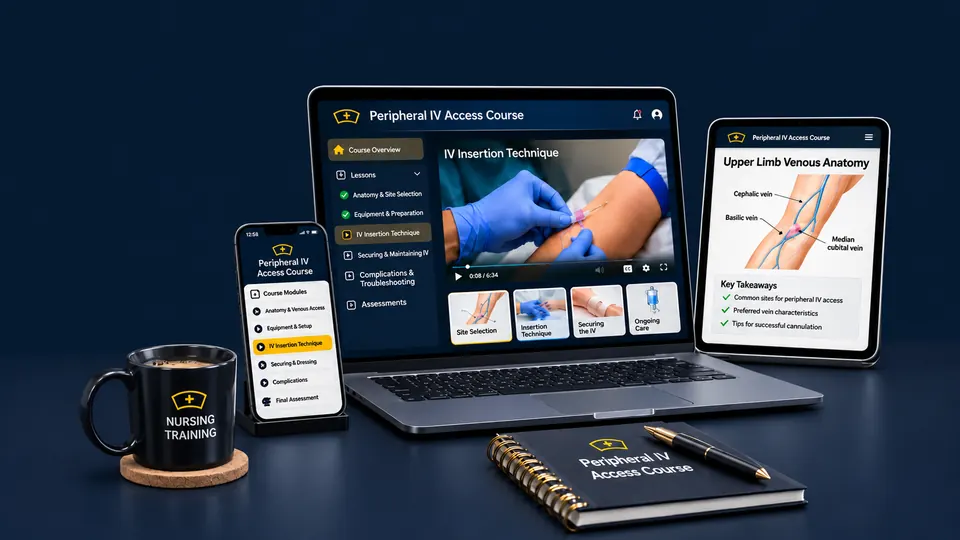
Learn the step by step by watching real insertions up close, as many times as you need.
- 100% practical
- From the basics to difficult veins
- For nurses and nursing students
- 40,000+ students trained
- 30-hour certificate
- Lifetime access
You learn by watching real insertions, up close
Camera close on the hands, with different patients: adult, elderly, difficult veins. Watch as many times as you need.
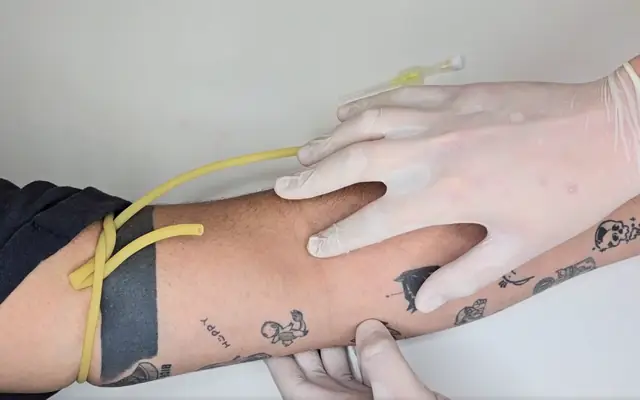
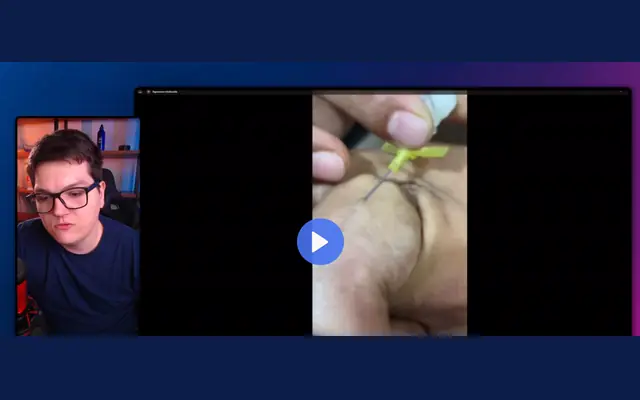
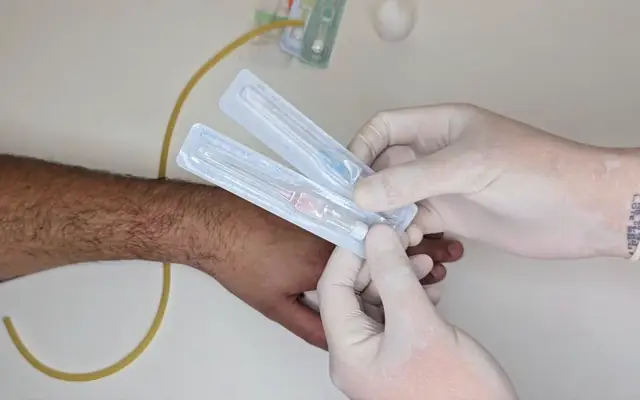
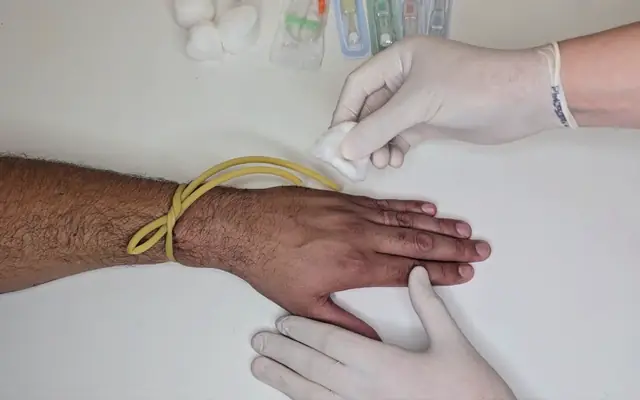
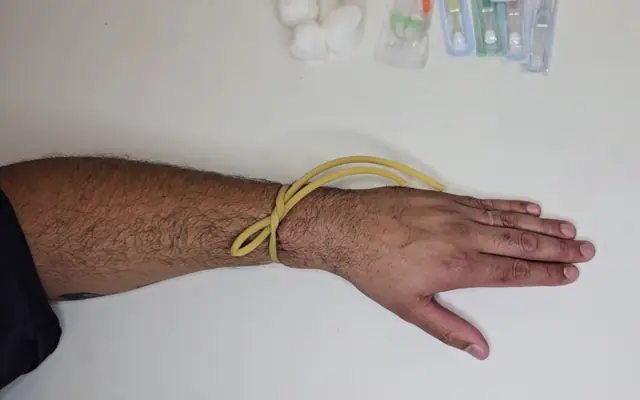
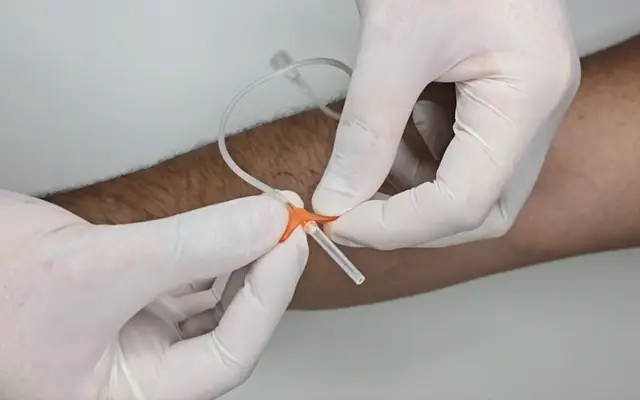
Have you ever thought one of these before an IV insertion?
"If I miss again, I will have to call someone."
"I am not going to get this vein."
"Everyone is watching."
"In my training I only saw this once."
"The patient is already in pain and I have not even started."
If you recognised yourself in one of these, the problem is not you. Nobody ever taught you a method.
Why your training did not leave you confident with IV insertion
Most training programs show the insertion once or twice, on a practice arm, with a single device. Then you go on shift and meet what the class never showed: an elderly patient, a small vein, a crying child, a different device, the team waiting.
01
Repetition
You saw it, but you did not see it again. Technique is learned by watching many times, with different patients.
02
Variety
Each unit uses a different device. If you only trained with one, you freeze when another shows up.
03
Decision
Nobody teaches how to choose the vein, the gauge and the moment. Without criteria, the insertion becomes a guess.
Confidence does not come from years on shift. It comes from a method you repeat until it becomes automatic.
The method
The Simplified IV Access Method in 3 steps
Step 1
Assess
Read the patient before picking up the supplies: hydration, age, skin, history of insertions. Where to look for the vein and where never to look.
Step 2
Choose
The right vein, the right device, the right gauge for that patient and that indication. The criteria that take guesswork out of the insertion.
Step 3
Insert and secure
The technique in close-up, step by step, with real patients: angle, advancement, flashback, securement and documentation.
"Can you really learn IV insertion online?"
Yes, because you watch the same technique repeated with different patients, with the camera close on the hands, as many times as you want. It is the repetition your training did not give you.
The hospital is not a school and the patient is not a test subject. Learn first, apply with confidence.
What you get when you join
15+
practical recorded lessons
10+ hours
of content in total
30-hour
certificate of completion
Lifetime
access, on phone, tablet or computer
- Real insertions with different patients
- Several devices demonstrated
- Camera close on the hands in every insertion
- Lessons in English with subtitles
Modules
- 01Venous anatomy applied to IV insertion
- 02Patient assessment and site selection
- 03Devices: which one to use and when
- 04Insertion technique step by step
- 05Difficult veins: elderly, dehydrated, obese patients
- 06Securement, maintenance and removal
- 07Complications: recognise and act
Exclusive bonuses for this class
Patient Communication Guide for IV Insertion
Ready-to-use phrases to explain the procedure, calm patients who are afraid of needles and handle the relative at the bedside.
A calm patient, an easier insertion, and you in control of the situation.
IV Securement and Maintenance Guide
How to make the IV last longer: securement, flushing, dressing changes and the signs that it needs to come out.
Fewer repeated insertions, less pain for the patient, less work for you.
And for all students
Venous Anatomy Summary for IV Insertion
Lesson and illustrated summary: where the veins are, which to prefer and which to avoid.
You see the right vein before you touch the patient.
IV Complications Summary
Lesson and summary: phlebitis, infiltration, extravasation and hematoma. Recognise and act.
You know what to do when something goes off plan.
Quick Device Guide
Catheters, gauges, colors, butterfly needles and when to use each one.
No more doubt in front of the tray.
Safe Insertion Checklist
One page with the 20 points to check before, during and after.
No step forgotten, even on a busy shift.
All bonus guides are available in English, Portuguese and Spanish.
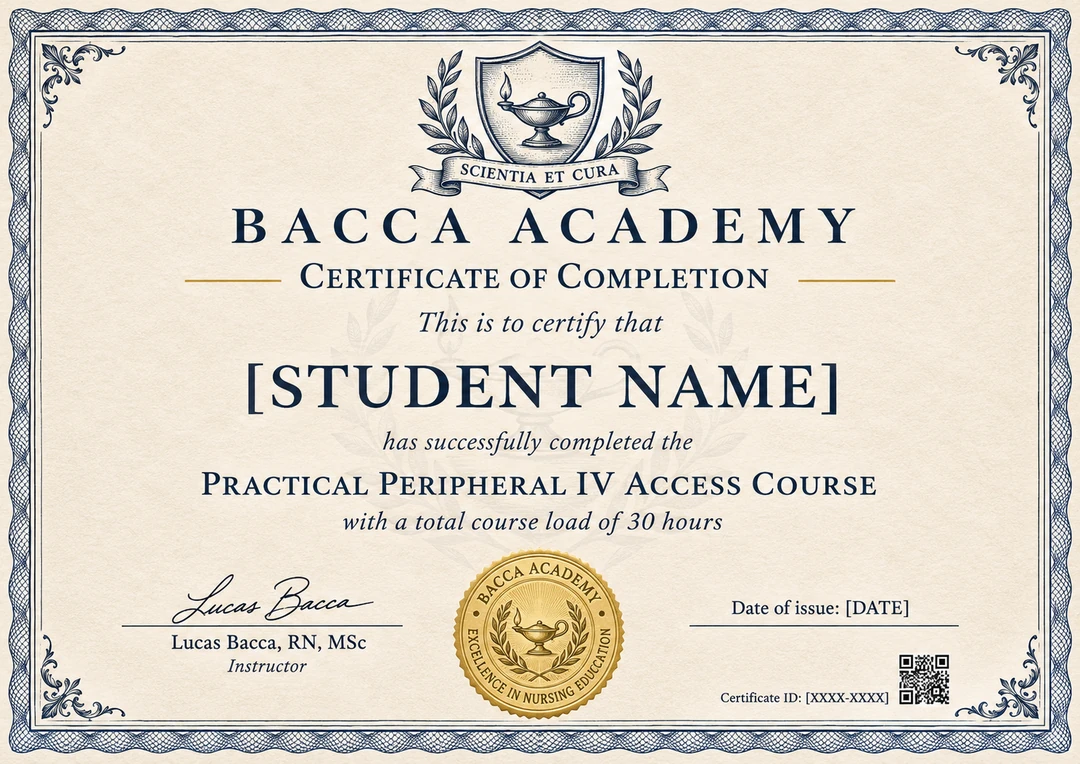
Included in the course
Your international certificate of completion, with 30 hours
When you finish the lessons, you receive a certificate in English, Portuguese or Spanish, issued by Bacca Academy, with your name and the course hours. To add to your resume, show in an interview or hang on the wall.
Certificate of course completion. It is not a license or professional registration.
This is for you if
- You work in patient care and still feel tense before an IV insertion
- You are a student or recently trained and want to arrive on shift with the technique ready
- You already insert IVs but freeze with elderly patients, children or small veins
- You want to stop depending on a colleague to get the IV
This is not for you if
- You are looking for an official certification from a regulatory body in your country. This is a training course, not a license.
- You want to learn central lines, PICC or ultrasound-guided insertion. This course covers peripheral IV access.
- You expect to learn without watching and practicing the step by step.
Everything you take with you
- Practical Peripheral IV Access Course, 15+ practical lessons
- Bonus: Patient Communication Guide for IV Insertion
- Bonus: IV Securement and Maintenance Guide
- Bonus: Venous Anatomy Summary for IV Insertion
- Bonus: IV Complications Summary
- Bonus: Quick Device Guide
- Bonus: Safe Insertion Checklist
- 30-hour certificate of completion
- Lifetime access, with all updates
How much is it worth to start your shift knowing you will get the IV? How much is it worth not having to call anyone? How much is it worth for the patient to feel only one stick?
That has no price. What has a price is the course, and it costs less than one shift.
Full course + 6 bonuses + certificate
Today, all for
US$ 37
One-time payment. Lifetime access. No monthly fee.
- Full course with 15+ practical lessons
- 6 bonuses
- 30-hour certificate of completion
- Immediate and lifetime access
Secure Checkout
On the next page you pay in your local currency, with a card or the payment methods of your country.
15-day guarantee. Watch the lessons and, if you feel it is not for you, ask for a refund within 15 days. No questions asked.
Secure purchase · Hotmart · Immediate access by email

Who teaches
Lucas Bacca, RN, MSc
Nurse, master's graduate and teacher known for making the complicated simple.
Lucas is a nurse, specialist and master's graduate. He teaches nursing everywhere it happens: at the university, as an academic professor; in the hospital, as a clinical placement instructor; on stage, as a speaker; and online, where he has already trained more than 40,000 students.
He became known for turning complex content into a simple step by step, and with that he has changed the lives of thousands of nursing professionals and students.
- 40,000+
- students trained
- 1.6 million+
- followers on Instagram
- 36 million+
- views per month
"Knowledge builds confidence."
Frequently asked questions
Is the course fully online?
Yes. You watch whenever and wherever you want, on your phone, tablet or computer.
Do I need experience?
No. The course starts from the basics and goes up to difficult veins.
Can I learn IV insertion by watching?
The lessons show real insertions, in close-up, with different patients. You repeat them as many times as you need and apply them on your shift under supervision, following the rules of your workplace.
What language are the lessons in?
English audio and subtitles in more than 12 languages.
Is there a certificate?
Yes, a 30-hour certificate of completion, in English, Portuguese or Spanish.
What language are the bonus guides in?
English, Portuguese and Spanish. You choose the version you prefer.
Does it work for my country?
The technique follows international standards for peripheral IV access. Local rules about who can insert an IV vary, so check the rules of your workplace.
How long do I have access?
Forever, including updates.
What if I do not like it?
You have a 15-day guarantee to ask for a refund.
Start your next shift knowing you will get the IV on the first attempt.
US$ 37
On the next page you pay in your local currency.